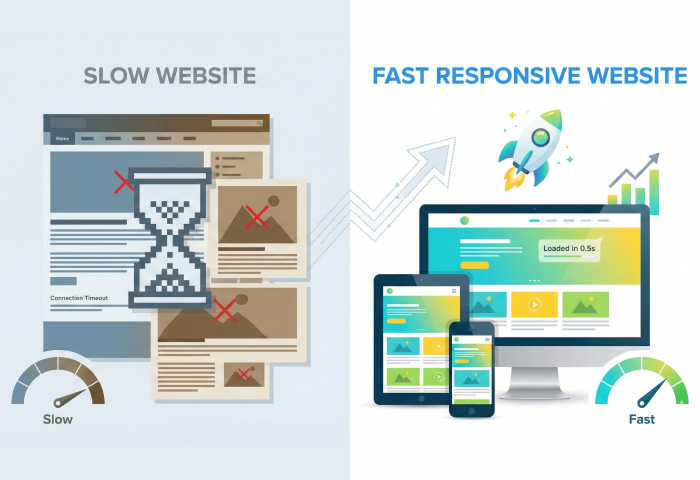
In today’s digital world, having a website is essential for every business. Whether you run a small shop, startup, or large company, your website acts as your online identity. However, one important decision businesses must make is choosing between a static website and a dynamic website.
Both types have their advantages and limitations. Understanding the differences will help you choose the right option for your business goals.
What Is a Static Website?
A static website is the simplest type of website. It consists of fixed web pages that display the same content to every visitor. These pages are usually created using HTML, CSS, and sometimes basic JavaScript.
When someone visits a static website, the server delivers the exact same page every time without any changes.
Key Features of Static Websites
- Fixed content on each page
- Faster loading speed
- Lower development cost
- Simple hosting requirements
- Limited interactivity
Advantages of Static Websites
1. Fast Performance
Static websites load very quickly because they don’t rely on complex server-side processing.
2. Low Cost
They are cheaper to build and host since they require minimal resources.
3. Better Security
With fewer databases and server-side scripts, static sites are less vulnerable to hacking.
Limitations of Static Websites
- Updating content requires manual coding
- Not suitable for large websites
- Limited functionality for users
Static websites are ideal for small businesses, portfolios, landing pages, and informational websites
What Is a Dynamic Website?
A dynamic website generates content in real time based on user interaction, databases, or server-side programming. These websites often use technologies like PHP, Python, Node.js, and databases such as MySQL.
Dynamic websites display different content for different users depending on their actions or preferences.
Key Features of Dynamic Websites
- Interactive user experience
- Content stored in databases
- Easy content management
- Real-time updates
- Advanced functionality
Advantages of Dynamic Websites
1. Easy Content Updates
Content can be updated through a CMS (Content Management System) without coding.
2. Highly Interactive
Users can log in, comment, search, and interact with content.
3. Scalable for Large Businesses
Dynamic websites can handle large volumes of data and users.
Limitations of Dynamic Websites
- Higher development cost
- Requires server-side processing
- More maintenance needed
Dynamic websites are best for e-commerce stores, social platforms, blogs, and large business websites.
Static vs Dynamic Websites: Key Differences
| Feature | Static Website | Dynamic Website |
|---|---|---|
| Content | Fixed | Changes dynamically |
| Speed | Very fast | Slightly slower |
| Cost | Low | Higher |
| Maintenance | Simple | Requires regular updates |
| Functionality | Limited | Highly interactive |
| Best For | Small websites | Complex platforms |
Which One Is Best for Your Business?
The right choice depends on your business needs and future goals.
Choose a Static Website If:
- You need a simple business website
- Your content rarely changes
- You want low development costs
- You prioritize speed and security
Choose a Dynamic Website If:
- You need frequent content updates
- You want user interaction (login, comments, cart)
- You plan to scale your website
- You run an online store or service platform
Final Thoughts
Both static and dynamic websites play important roles in modern web development. A static website is perfect for simple and fast online presence, while a dynamic website offers powerful features and flexibility for growing businesses.
Before making a decision, consider your budget, website purpose, scalability needs, and maintenance capabilities. Choosing the right type will help your business build a strong and effective online presence.